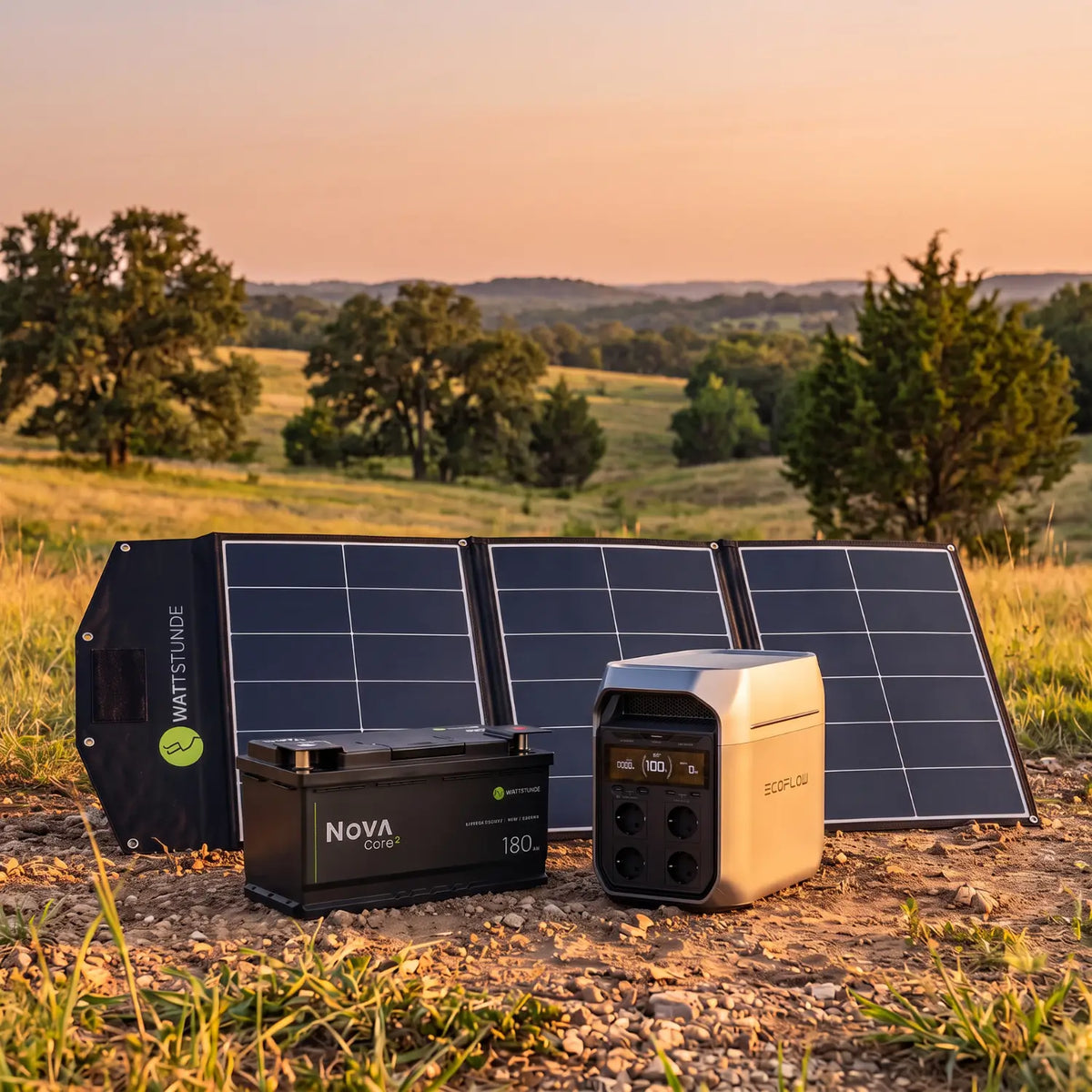
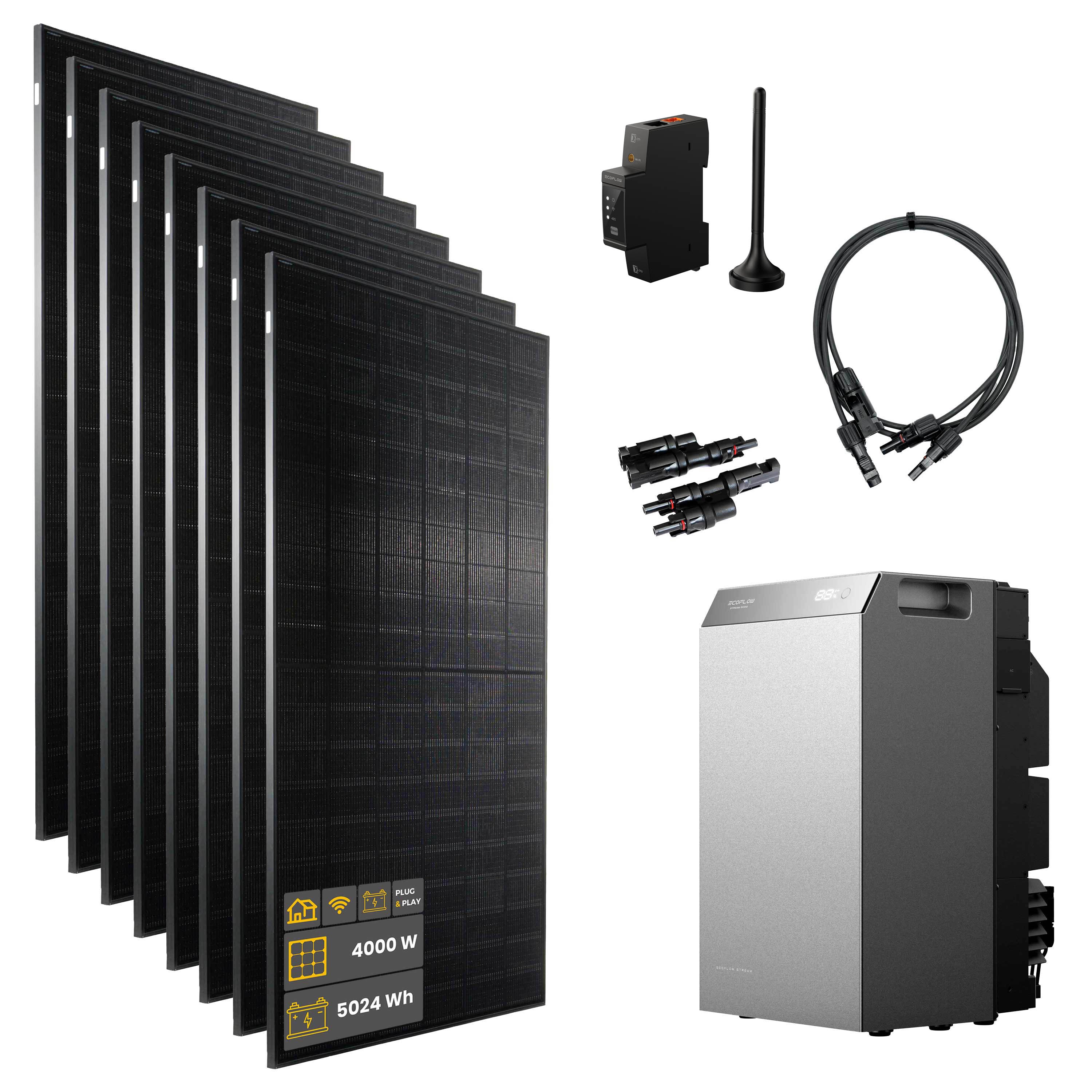
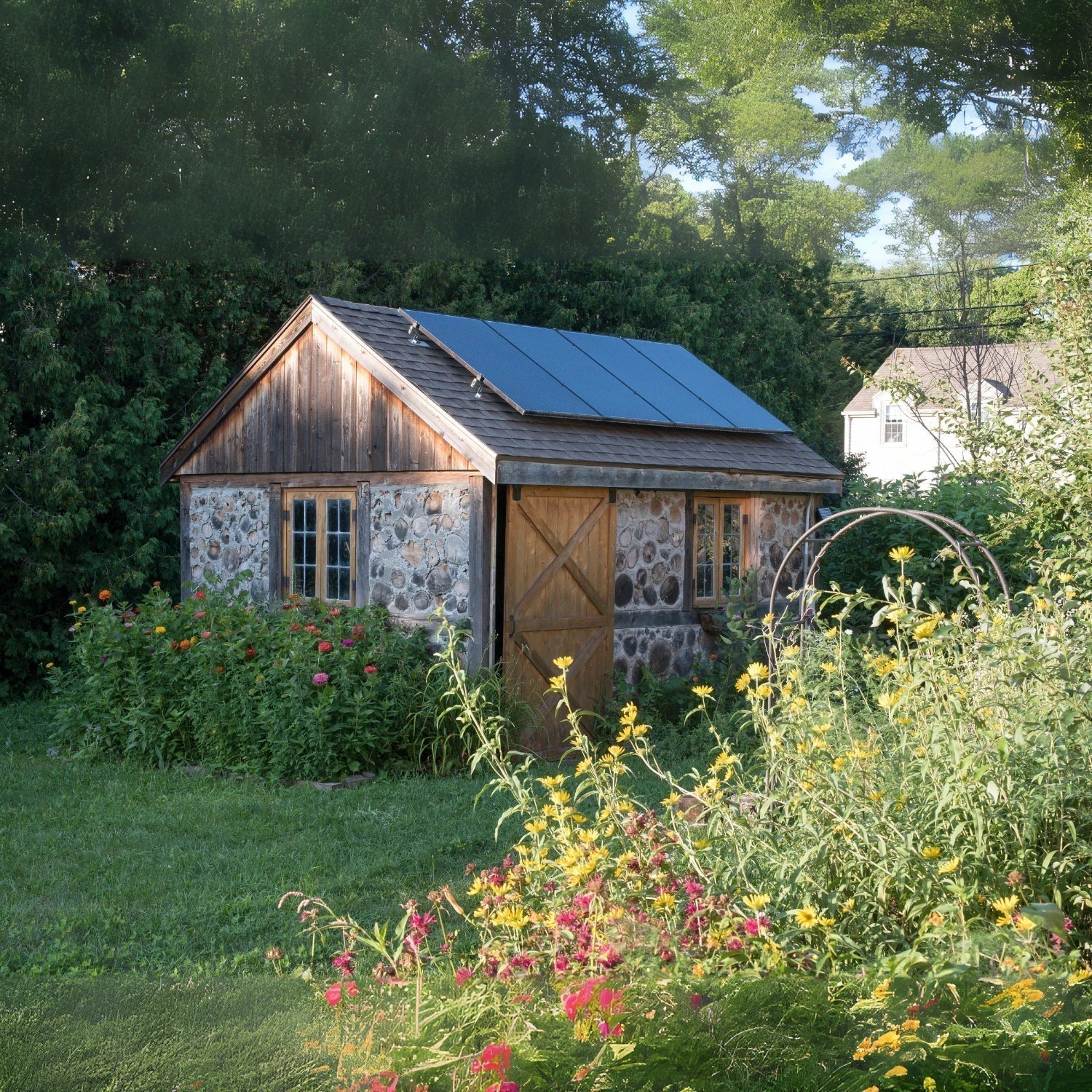
Solar systems can be installed not only on rooftops or balconies You can install it anywhere you need electricity. This way you can also supply power to your garden shed, which doesn't have a power connection, or your... Tiny House equip them with a solar power system. These are then called off-grid systems, which can be installed without a shore power connection. The off-grid system consists of three Up to four components , which must be adapted depending on the location and power requirements. Let's take a look at what these components are and which ones you absolutely shouldn't do without.
The most important element is the Solar module [1] . These modules consist of photovoltaic cells that convert sunlight into direct current. The amount of energy generated depends directly on the quality and capacity of the module and the amount of sunlight hitting the module. Therefore, no solar power can be generated without the solar module.
An often underestimated but crucial component of an off-grid system is the Charge controller [2] . This device monitors the battery's state of charge and regulates the charging current from the solar panel to the battery. Why is the charge controller so important? Without it, there is a risk of overcharging, which can not only damage the battery but also pose safety risks. An overcharged battery can lose power, become prone to failure, and in the worst case, even be damaged. Furthermore, the charge controller minimizes the risk of short circuits and overheating, thus increasing the safety of the entire system.
The The battery [3] acts as an energy storage device and provides electricity when the sun isn't shining. High-quality batteries are crucial for a reliable energy supply. An off-grid system also works without a battery, but then the electricity cannot be stored and can only be used directly. For example, you can run your pond pump in the summer when the sun is shining during the day. However, if you want to light up your garden in the evening or use your garden tools on cloudy days, you need a storage system for the solar power.
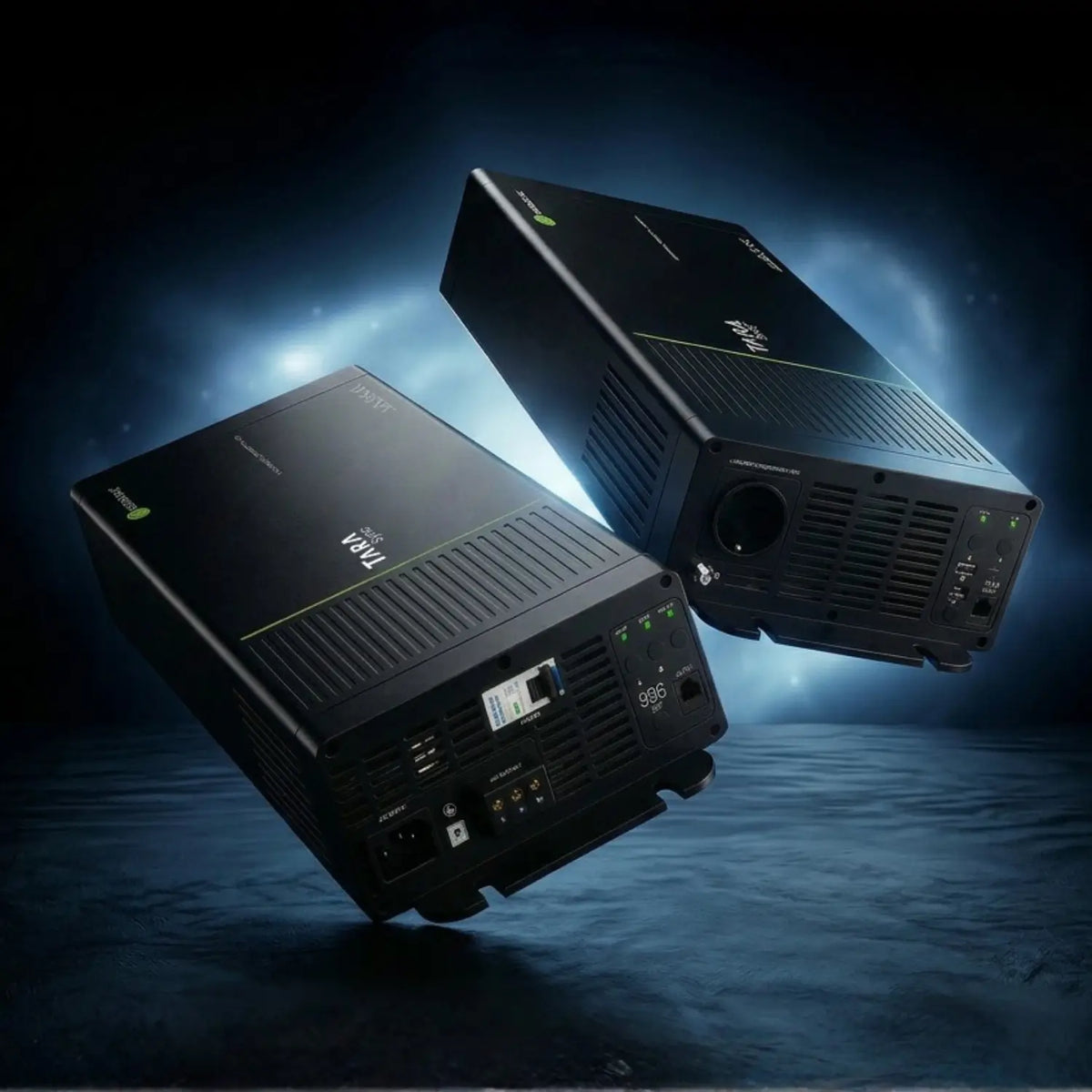
Another component of an off-grid system is the Voltage converter [4] , also known as an inverter. This converts the direct current stored in the battery into the alternating current necessary for operating electrical devices. This allows the stored energy to be used for various applications. For example, you can directly connect a string of lights or a garden tool.

These four components – solar panels, charge controller, battery, and inverter – form the core of an off-grid solar power system. Each component fulfills a specific function, and their interaction is crucial for the system's efficiency and longevity. The charge controller, in particular, plays a key role by protecting the battery and thus ensuring the reliability and safety of the entire off-grid system. Therefore, a charge controller should never be omitted if you are aiming for a high-performance and sustainable solar solution. The required size of the system depends on the devices that will be connected. The more high-power devices you plan to connect, the larger the solar panels and battery need to be to ensure a sufficient power supply, even when the sun isn't shining.
Here's how you can determine your consumption
First, determine your expected daily energy consumption. You can find this by identifying all the devices you use each day and the duration of use (hours per day). Add up the wattage of each device and multiply the sum by the expected operating hours:
Consumption (W+W+W+W...) x duration (h) = total (W/h)
Add 10-30% to this figure as a performance reserve (for hours with little sunshine, general system losses). Based on this result, the right system for your needs can be selected.
The required Watt Peak The power (Wp) of a solar module can be converted into watt-hours (Wh) as follows:
Wp x 4 = Wh/d or Wh/d : 4 = Wp
The calculation of Battery capacity You calculate it as follows:
Daily energy requirement (Wh) x self-sufficient days x depth of discharge factor + 30% of the power requirement as reserve
This requires some experience, and of course our experts are available to assist you with precise calculations, valuable tips and advice for individual consultation plus a quote.