
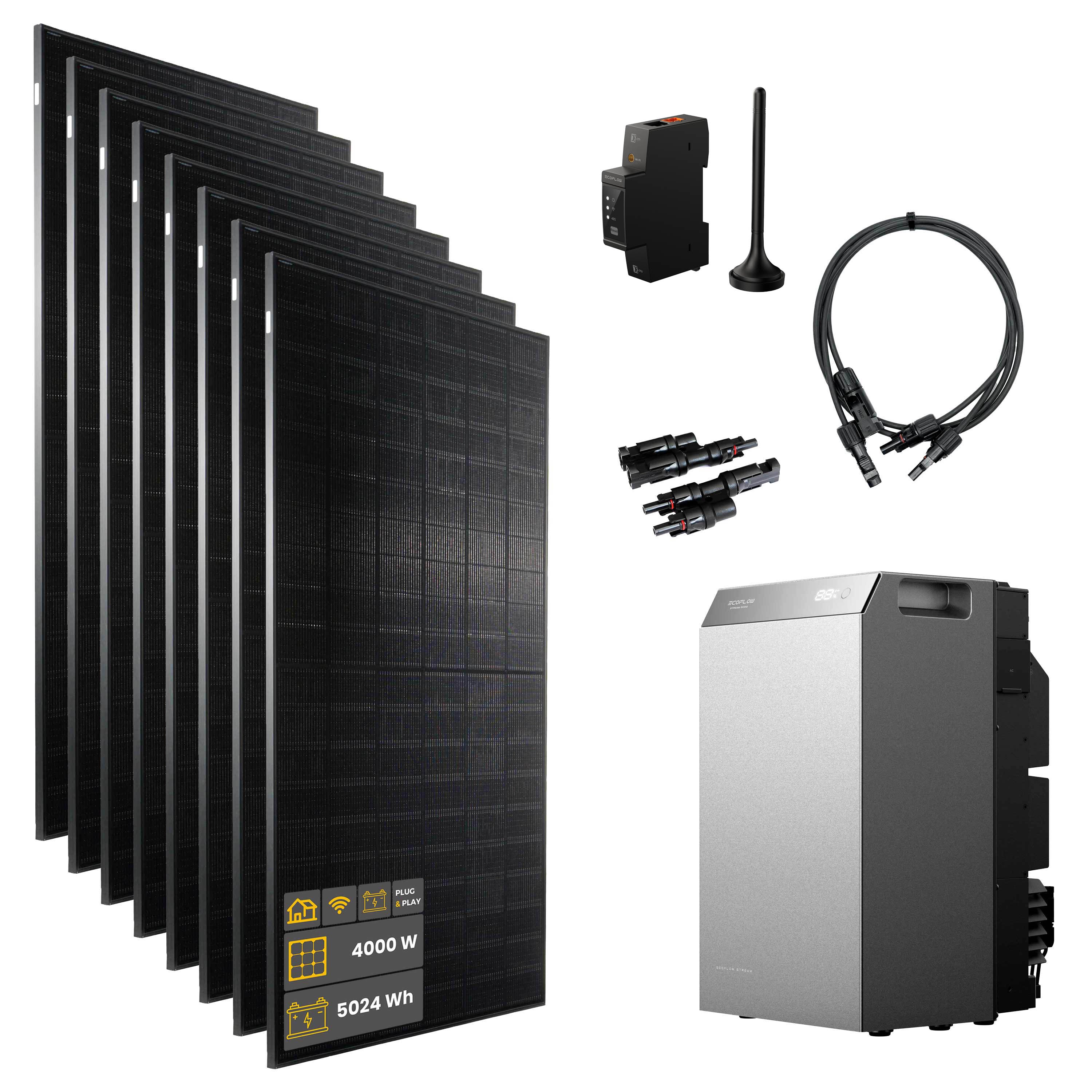

If you're spending extended periods at sea on your boat, a reliable power supply is crucial. Devices like lights, navigation equipment, refrigerators, and radios require a continuous power supply. A solar system for boats ensures that your onboard battery doesn't run out of power and that you can cover all your electrical needs, even on longer trips.
In this guide you will learn:
- which components you need for an onboard solar system,
- how to calculate your electricity needs ,
- what matters when installing on boats ,
- and what advantages flexible solar modules offer.
What do you need for your solar system on the boat?
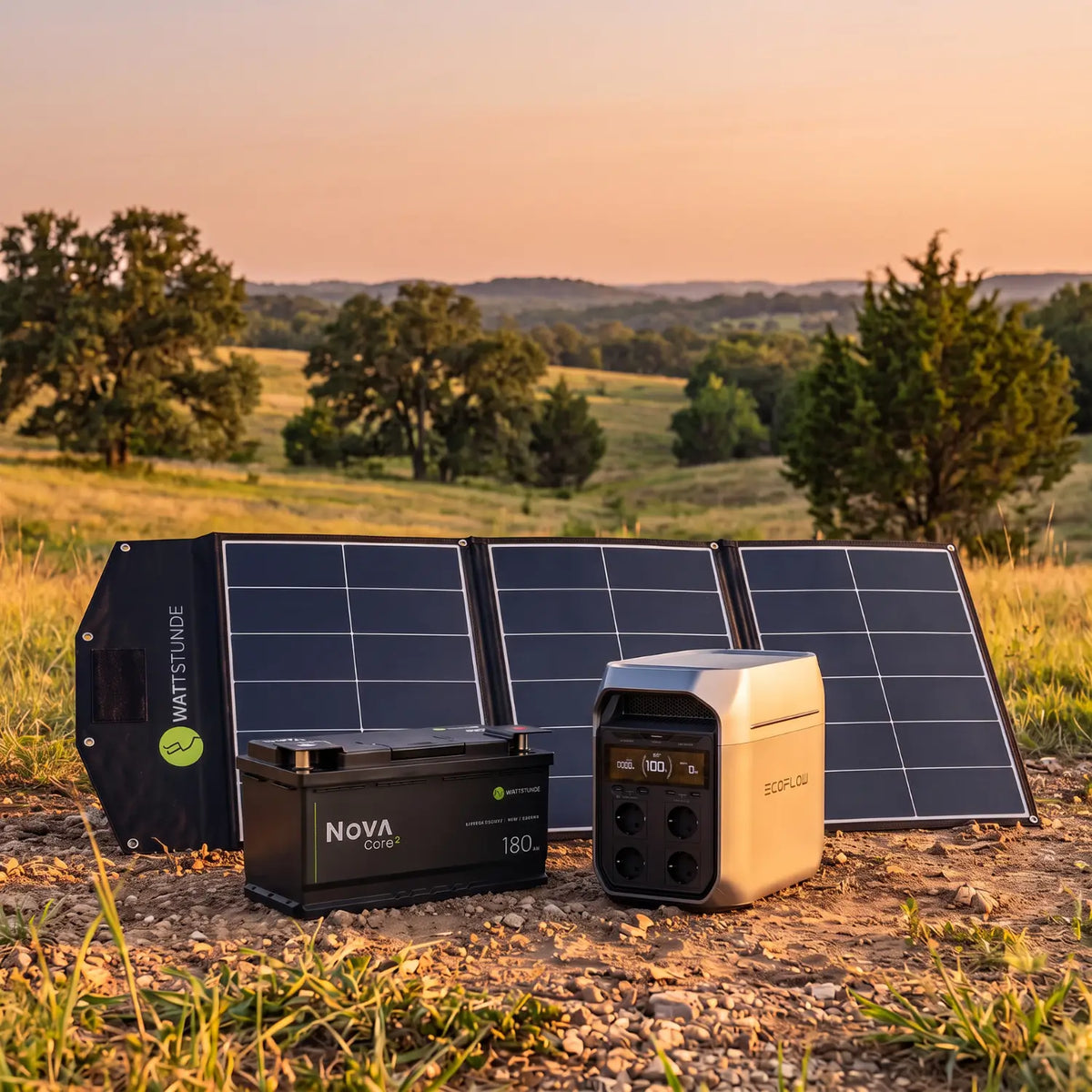
For a functioning photovoltaic system on boats, you need three key components:
- Solar panels – convert sunlight into electricity
- Charge controller – protects the battery and regulates the charging process
- Batteries – store energy for your devices
If a charge controller or battery is already present, you should check this before installation.
The solar panel – the heart of your boat's solar system
Function: Converts sunlight into electrical energy.
Dimensioning: Multiple modules can be connected in parallel or in series.
Mounting options: permanently installed, flexible or as a solar bag.
Tip: Use high-quality marine solar panels that are designed for humidity, saltwater and strong sunlight.
The charge controller – Gentle charging for your battery
The charge controller is the link between the solar panel and the battery:
- protects against overload
- extends the lifespan of your on-board battery,
- can supply both the starter and on-board batteries simultaneously.
The battery – energy storage on board
Lithium-ion batteries (LiFePO4) are best suited:
- lightweight, compact and high capacity,
- safe (non-flammable),
- Ideal for boats with limited space and weight restrictions.
How to determine your electricity needs on your boat
Create an overview of all consumers:
| consumer | Number | Power (W) | Running time (h/day) | Consumption (Wh/day) |
|---|---|---|---|---|
| lighting | 8 | 2 | 4 | 64 |
| GPS | 1 | 4 | 10 | 40 |
| radio | 1 | 5 | 5 | 25 |
| In total | 129 Wh/day |
Note: Your actual power needs are usually higher. Plan for sufficient battery capacity to ensure you're covered even in bad weather and low sunlight .
Influencing factors – When and where are you traveling?
- Region & Season: Mediterranean in summer = high yield, North Sea in autumn = less sun.
- Use a solar calculator : With a solar yield calculator, you can calculate the daily yield at your location.
Installation of your solar system on the boat
Options:
- Deck, sun canopy, equipment rack – firmly screwed or glued in place
- Railing mount – flexible, but more movement in rough seas
- Solar bags – portable, optimal alignment possible
A mix of permanently installed modules and mobile solar bags is often the best solution.
Flexible solar panels and solar bags – maximum efficiency
With mobile solar bags like the SunFolder , you can utilize the optimal angle of incidence of the sun :
- 90° = 100% power
- 70°C = approx. 94% power
- 60°C = approx. 87% power
Advantage: always flexibly positionable and space-saving when stored.
Disadvantage: securing the equipment can be more difficult when sailing.
Which locations are best suited for assembly?
- Avoid partial shading from sails, railings, or antennas.
- Make sure you choose flat surfaces without shadows.
- Position the modules so that they receive as much sunlight as possible throughout the day.
Conclusion – Why a solar system makes your boat more independent
A solar power system on the boat makes you more independent from shore power, allows for longer trips without stopping in port, and is an environmentally friendly solution .
You benefit from:
- Independence at sea
- Flexibility in route planning
- Sustainable energy supply
Discover our selection of solar panels, solar bags and boat batteries now at Solarkontor .