

If you enjoy camping and want to be self-sufficient for as long as possible, modern lithium batteries are practically indispensable. The so-called super batteries are particularly exciting right now: large LiFePO4 batteries with 400 to 700 Ah, which offer a completely new level of independence. In this article, we'll look at what makes these batteries stand out, what advantages they offer for camping, and what you should consider when using them.
What has changed regarding camping batteries?
Previously, lead-acid or gel batteries were primarily used in motorhomes. These are robust but heavy, have low cycle life, and offer only a fraction of the usable capacity of modern lithium systems. The advent of large LiFePO4 batteries has completely changed the landscape.
Why? It's quite simple:
- Lithium batteries are lighter and more compact.
- You can use almost the entire nominal capacity
- They can withstand significantly more charging cycles.
- High currents can be drawn stably.
These advantages mean that even capacities of 400 to 700 Ah are now realistically installed – allowing you to go for days without a campsite.
Technical features of modern super batteries
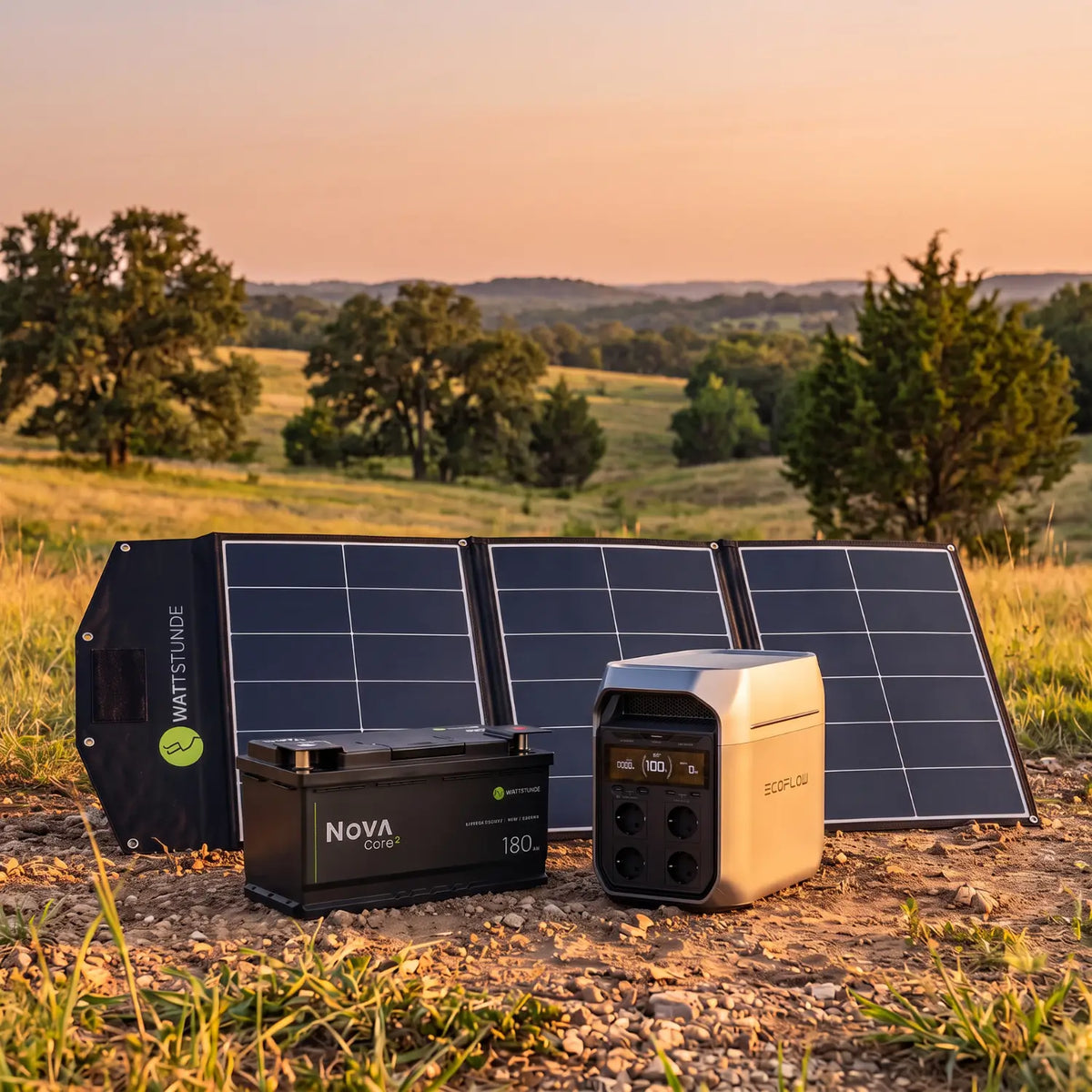
Let's take an example of the WATTSTUNDE NOVA Core 480 Ah , which is very typical for this new battery class.
Technical specifications at a glance
|
feature |
Value |
|
capacity |
480 Ah |
|
Energy content |
approx. 6 kWh |
|
Weight |
approx. 46 kg |
|
Tension |
12.8 V |
|
Temperature range discharge |
down to -30 °C |
|
Cycles |
up to 6,000 at 80% DoD |
|
wiring |
Series and parallel connection possible |
What do these values mean in practice?
A 480 Ah battery offers you around 6 kWh of energy – enough for several days of independent operation, even if you frequently use the refrigerator, lights, water pump, or laptop. Another practical advantage is that many large batteries have extremely low cycle depths. This means that with a high capacity, you only need a small portion of it each day – and this significantly increases its lifespan.
The lifespan of lithium batteries depends heavily on how deeply they are discharged in everyday use. Large batteries reduce the cycle depth and therefore the number of "actual" charge cycles. The result: The battery lasts significantly longer.
Super battery vs. several small batteries – which is better?
Many campers face the question: Should they use one large battery or connect several smaller ones in parallel?
Advantages of a single large battery
- Only one BMS (Battery Management System) – less complexity
- Higher overall stability
- Improved power output under high load
- Reduced risk due to improper parallel connection
- Easier installation
Advantages of multiple small batteries
- Flexibility during installation (e.g., in confined spaces)
- If a defect occurs, only one part fails.
Which is better?
For serious campers who operate heavy loads and want maximum self-sufficiency, a large battery is usually the better choice. It delivers more power consistently, is more durable, and less prone to technical failure.
For vans with difficult installation positions, several smaller batteries can be useful. In this case, a clean parallel connection and identical battery types are essential.
Specific advantages in everyday camping
Once you've installed a large lithium battery, you'll notice the difference immediately. Here are some of the biggest advantages:
1. Self-sufficiency for several days – without a campsite
Thanks to capacities of over 400 Ah, you can easily camp off-grid for several days without needing shore power. Especially practical for:
- Off-grid adventure
- Travel to remote areas
- Parking spaces without electricity
2. Operation of high-power consumers
Modern campers often use devices such as:
- Induction hob
- coffee machine
- Compressor refrigerator
- air conditioner
- Fan heater (short time)
A large battery can reliably supply these loads without the voltage dropping.
3. High peak currents = more comfort
Super batteries can often deliver 200 to 300 A continuous current – some models even more. This is important if you are operating powerful inverters.
4. More usable energy
A 200 Ah lead-acid battery often only has a usable capacity of 80–100 Ah in reality. A 480 Ah lithium battery, on the other hand, delivers almost its entire nominal capacity. As a result, a 480 Ah lithium battery quickly provides 5–6 times the energy of a previous system.
5. Less wear and tear due to fewer cycles
As mentioned before: Since you only use a small percentage each day, technically speaking, hardly any full cycles are completed. A large battery therefore lasts significantly longer.
What you should pay attention to when using it
However powerful super batteries are, they still need to be correctly sized and installed.
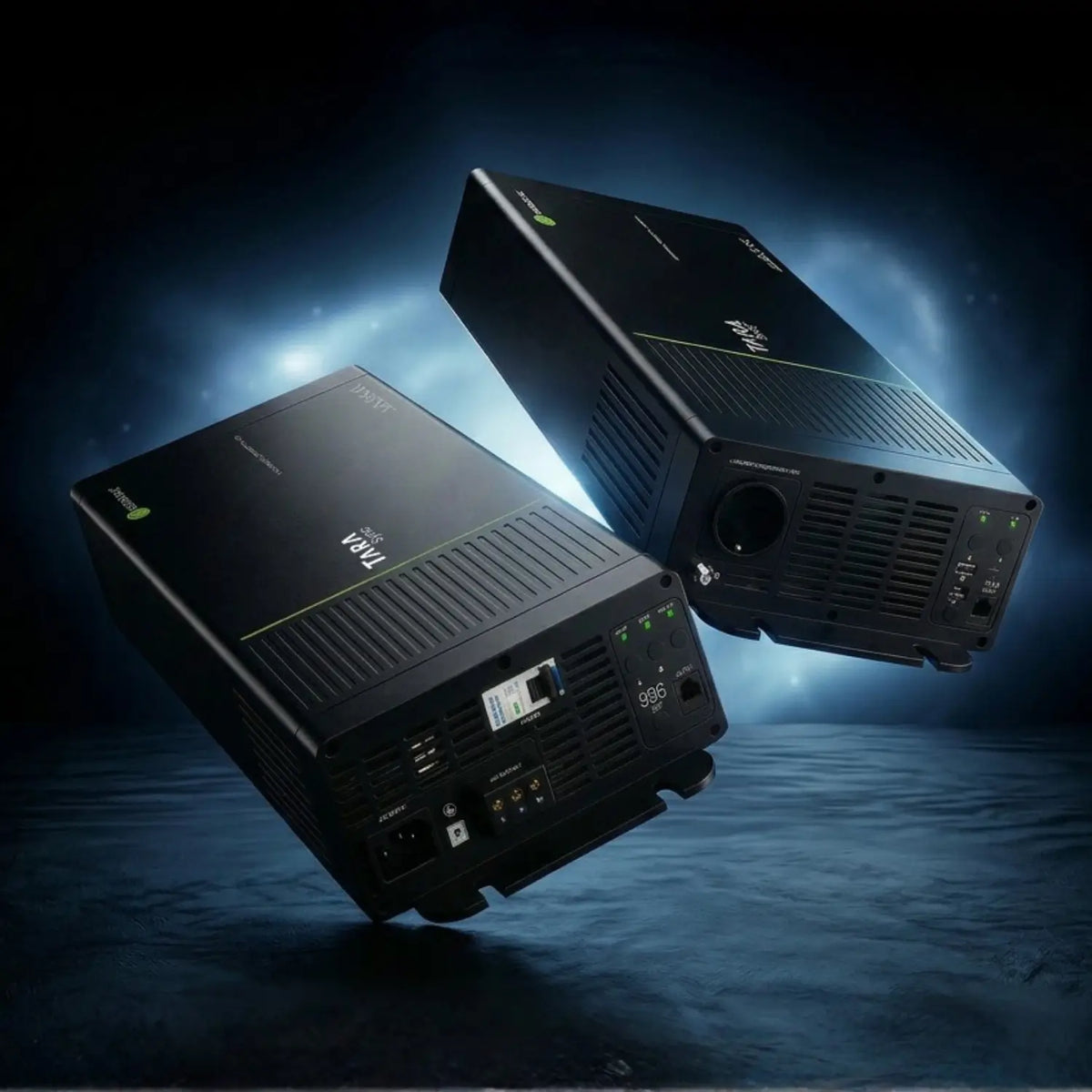
- Suitable charging technology: Solar charge controllers (MPPT), boosters, and mains chargers must be lithium-compatible.
- Pay attention to cable cross-sections: Suitable cross-sections are mandatory for high currents.
- Protection: Cables must be adequately protected.
- Mounting location: Not too close to heat sources, easily accessible, vibration-resistant.
- Consider peak loads: The battery must be compatible with the size of the inverter.
It's best to calculate your power consumption beforehand – this way you'll find the perfect battery size for your camping style. In our shop you'll find a handy power consumption calculator that makes it easy to determine your needs and know exactly how much power you actually require.
Click here to access the energy consumption calculator: solorkontor.shop/pages/solarrechner
Who benefits from a super battery – and who doesn't?
Ideal for you if…
- You want to travel for a long time without a campsite
- You are using a high-performance inverter
- You operate multiple devices simultaneously
- If you are traveling in winter (power-intensive heating, fans, blowers)
- You want maximum reliability
Not absolutely necessary if…
- You do short weekend trips
- Your electricity consumption is low
- You usually stay at campsites anyway
Developments & Trends
The market for camping batteries is growing rapidly – and the batteries are becoming increasingly powerful. Newer models offer:
- Capacities up to over 700 Ah
- Faster charging speeds
- Improved BMS systems
- Smart app monitoring
- Integration into complete energy solutions
For campers, this means: more comfort, more power and fewer electricity worries.
Large lithium batteries are a real game-changer for camping. They offer enormous capacity, strong power reserves, and an impressive lifespan. If you travel a lot, plan on extended off-grid camping trips, or use high-powered appliances, a super battery is one of the best upgrades you can give your camper.